
New Mexico VINE Release Coverage
New Mexico VINE is the state’s use of the national VINELink service. NMCD describes it as free, confidential, and available around the clock in English, Spanish, and Navajo. It provides public custody or location information and lets a registrant ask for notice of certain events. Statutory notices to qualified victims follow a separate process, so a public VINELink registration should not be confused with formal participation in a case.
Coverage is record-based. A county jail record comes from a participating local agency. A state-prison record comes through NMCD. The agency selector must be checked live because NMCD does not publish a definitive county-by-county coverage table on its VINE page. If a county does not appear, use that jail’s own custody and records channels. If the person transferred, search the new custody system rather than treating the old record as a complete chain.
The official NMCD VINE page describes release, out-to-court, and escape notification functions.
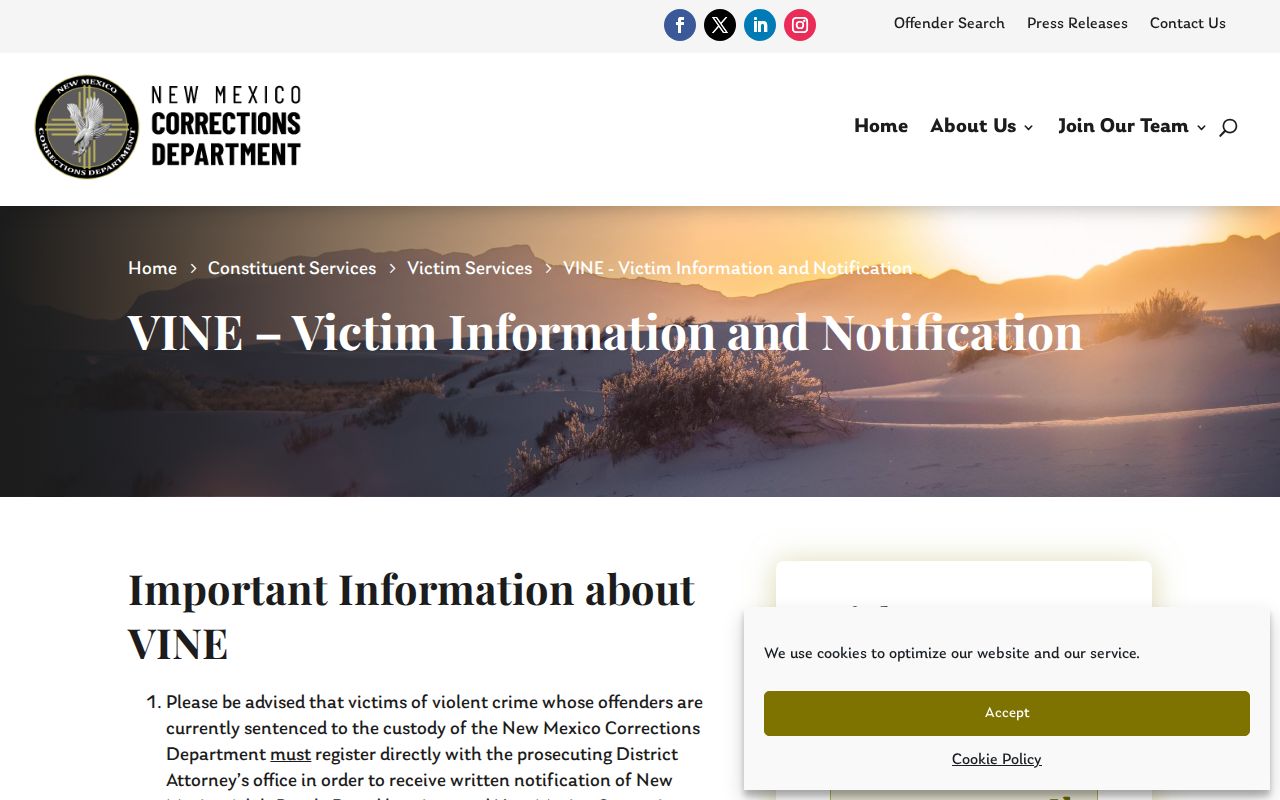
It also states an important exception: prison-to-prison transfer notices are not currently issued through this channel.
Search One New Mexico VINELink Record
A VINELink release check is meant for one named person, not a list of everyone recently released statewide. Start with the most precise identifier available. A booking or offender number lowers the risk of choosing a namesake. The facility matters too. A person with a county booking record and a later NMCD record may appear in distinct entries that reflect different parts of the custody chain.
The VINELink portal provides the New Mexico selector, person search, and notification controls when the service is operating.
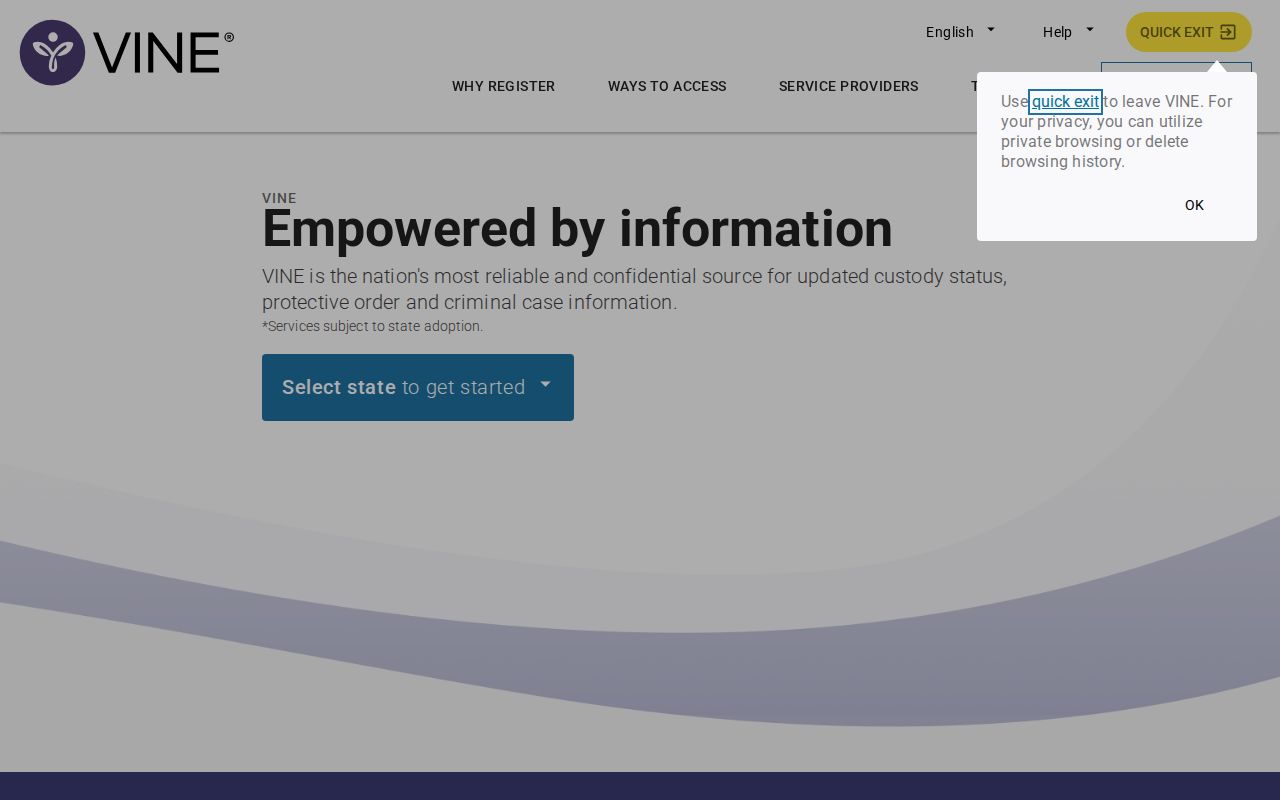
The displayed record must be matched by name, identifier, and facility before its custody wording is relied upon.
- Open VINELink and select New Mexico from the jurisdiction choices.
- Enter the person’s name. Add the offender or booking number when it is known.
- Compare all available identifiers and the holding agency. Do not choose a result on name alone.
- Open the exact record and read the current custody words, facility, and event information as displayed.
- If the old facility no longer holds the person, check for a new county or NMCD record and verify the movement with the agencies.
County release practices differ. Some jails expose broad public search tools, while others show only current custody or require a records request. The County Directory routes the inquiry to the locality that actually held the person. A current roster is useful before release. After an exit, the booking and release record is usually the better source.
Rural custody routes can add another layer. Some New Mexico counties do not operate an adult jail and send detainees to a facility elsewhere. In that case, a search limited to the county of arrest can miss the holding-agency record. Follow the person to the jail that booked and released them, then match any VINELink result to that agency. A statewide selector does not turn varied county feeds into one uniform recent-release list.
Movement into NMCD also creates a new state-custody question. A county entry that ends with transfer to the Corrections Department confirms departure from the local jail, not community release. Search the NMCD record with Include Inactive when appropriate, compare the offender number, and request the movement history if the public fields do not settle the sequence.
Note: A missing VINELink match may reflect spelling, participation, transfer, maintenance, or record limits and does not prove release.
Read a New Mexico VINE Result
Read only what the live record says. The statewide research did not capture one official released-result label that can be promised across every county and NMCD entry. A notice can corroborate that custody changed, yet the originating jail or NMCD remains the source for the exact release date, time, code, authority, and destination.
| VINELink item | What it can establish | What it cannot establish alone |
|---|---|---|
| Name and identifier | Which displayed person record is being viewed | Identity without comparing other shown facts |
| Custody status | The status wording supplied by that agency | A universal final discharge from all systems |
| Facility or location | The agency or place tied to the record | Residence or freedom from another hold |
| Release notice | A reported change in the selected custody record | The precise release code, authority, or destination |
| Scheduled event | A pending event when the agency supplies one | A guaranteed actual exit |
The NMCD offender search is a separate state source. It covers prisons and statewide P&P, not county or city jails. Its form includes Active, Include Inactive, and Absconder Only choices. A P&P location may mean a person is physically in the community while still under supervision. An inactive result does not by itself prove successful sentence discharge.
The official NMCD search form illustrates the separate name, offender-number, status, age, and region controls.
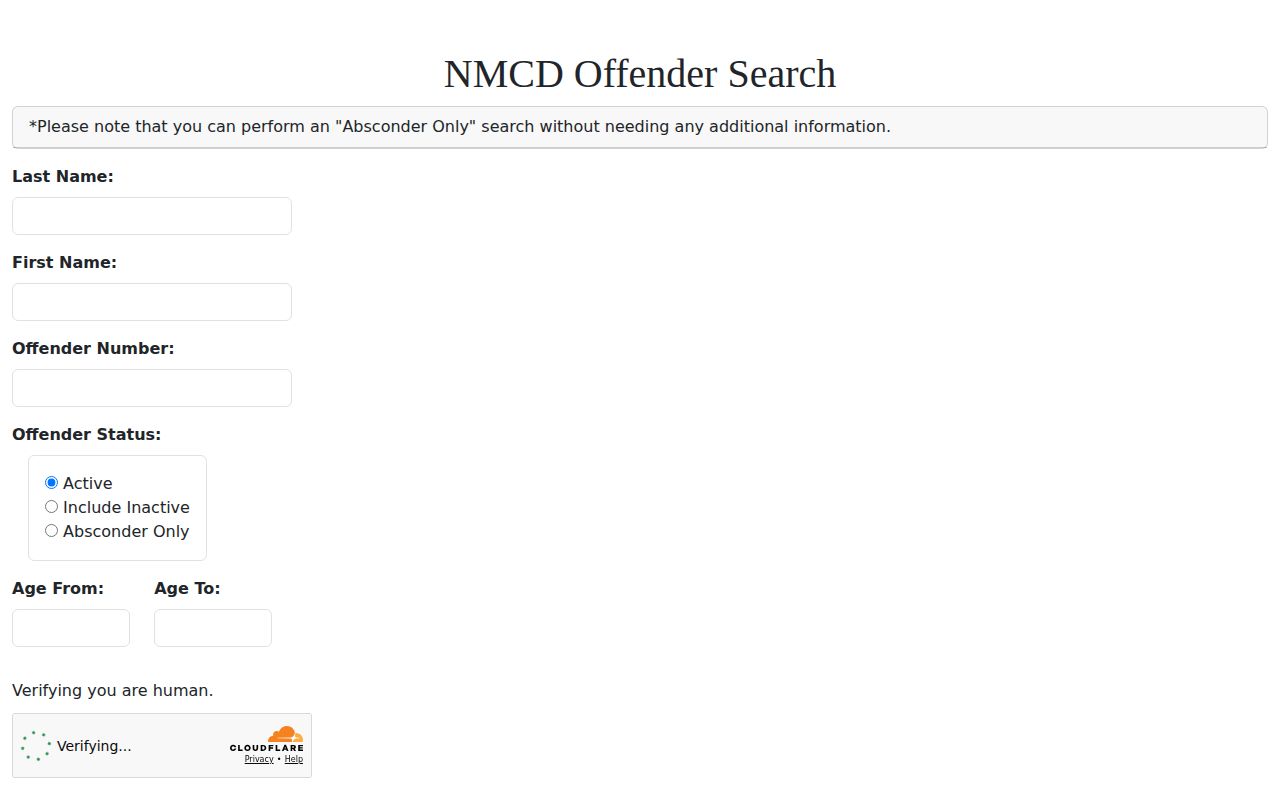
Comparing VINELink with NMCD can clarify state custody, but exact prison-exit facts still belong to the movement or release record.
Register New Mexico Release Alerts
Registration begins only after the exact offender and facility record has been selected. Available channels can include phone, text, or email. Choose the event and contact method shown by the service. A telephone registration uses a four-digit personal identification number, or PIN, to confirm receipt when an automated call arrives.
- Select the matching offender and facility record, then open its notification options.
- Choose the available phone, text, or email method and enter current contact details.
- For telephone notice, create a four-digit PIN and keep it available for the automated call.
- Listen to the call, enter the PIN followed by the number sign, and confirm receipt.
- Update the registration if contact details change, and register again on a new record after a covered transfer when needed.
Current NMCD instructions say automated calls may continue until confirmation or for 48 hours. That repeat cycle helps deliver a notice, but it does not expand what the event means. A release notice is still tied to one agency record. It should be checked against the jail release entry or NMCD movement record before stating where the person went.
- Release
- An exit reported by the selected custody source, which may still lead to another authority.
- Out to court
- A temporary court movement, not a completed community release.
- Escape
- An unauthorized departure reported as an alert event.
- Transfer
- Movement to another facility or agency, which may require a new registration.
New Mexico VINE Upgrade Warning
On August 12, 2026, NMCD’s VINE page carried a dated system-upgrade warning. It said NMCD VINE offender searches, new registrations, and most notifications were interrupted. Existing release notifications continued, while other notices were expected to resume later. The warning must be rechecked on the live official page because it describes an operating condition on a specific date, not a permanent service rule.
NMCD posted 505-827-8848 and 505-288-2535 for questions about NMCD offenders during that condition. Those numbers concern the NMCD side. A county record still belongs to the participating jail. If a person moves from one county to another or into NMCD, a new registration may be needed on the receiving record. Prison-to-prison transfer notices are not part of the current NMCD VINE function.
The NMCD offender-search warning page explains state jurisdiction, update timing, and the need to verify recent movement.
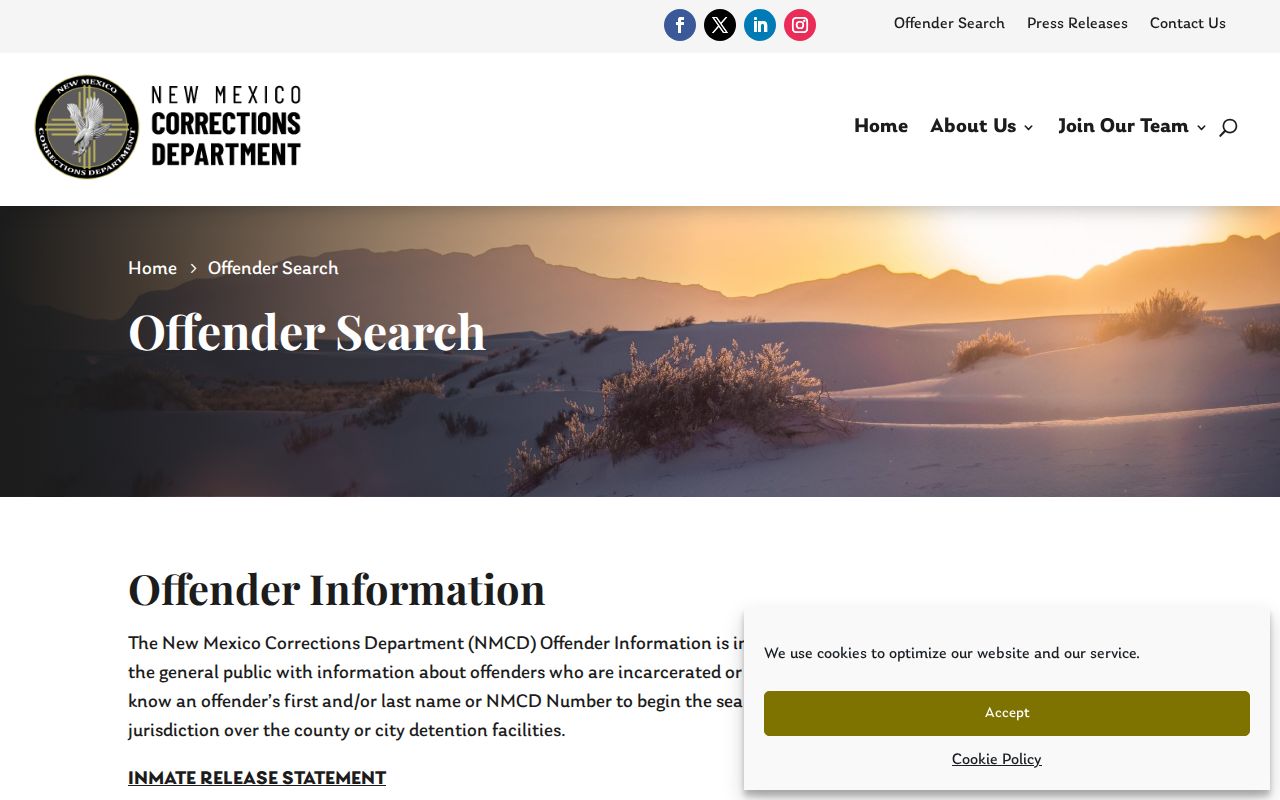
That caution applies equally after an alert: disappearance or movement in one system does not prove final release from every authority.
Note: Adult Prisons information updates nightly with up to 24 hours allowed, while P&P information is described as real time.
Confirm a New Mexico VINE Release
VINELink does not cover federal Bureau of Prisons inmates. The BOP Inmate Locator is the right source for a federal prisoner and generally includes records from 1982 onward. A former federal prisoner may show RELEASED with a past Release Date or may be described as not in BOP custody. Even that federal result proves only the end of BOP custody, not freedom from U.S. Marshals, ICE, state, local, or supervision authority.
The BOP Inmate Locator shows the identifier and name search routes used for federal custody.
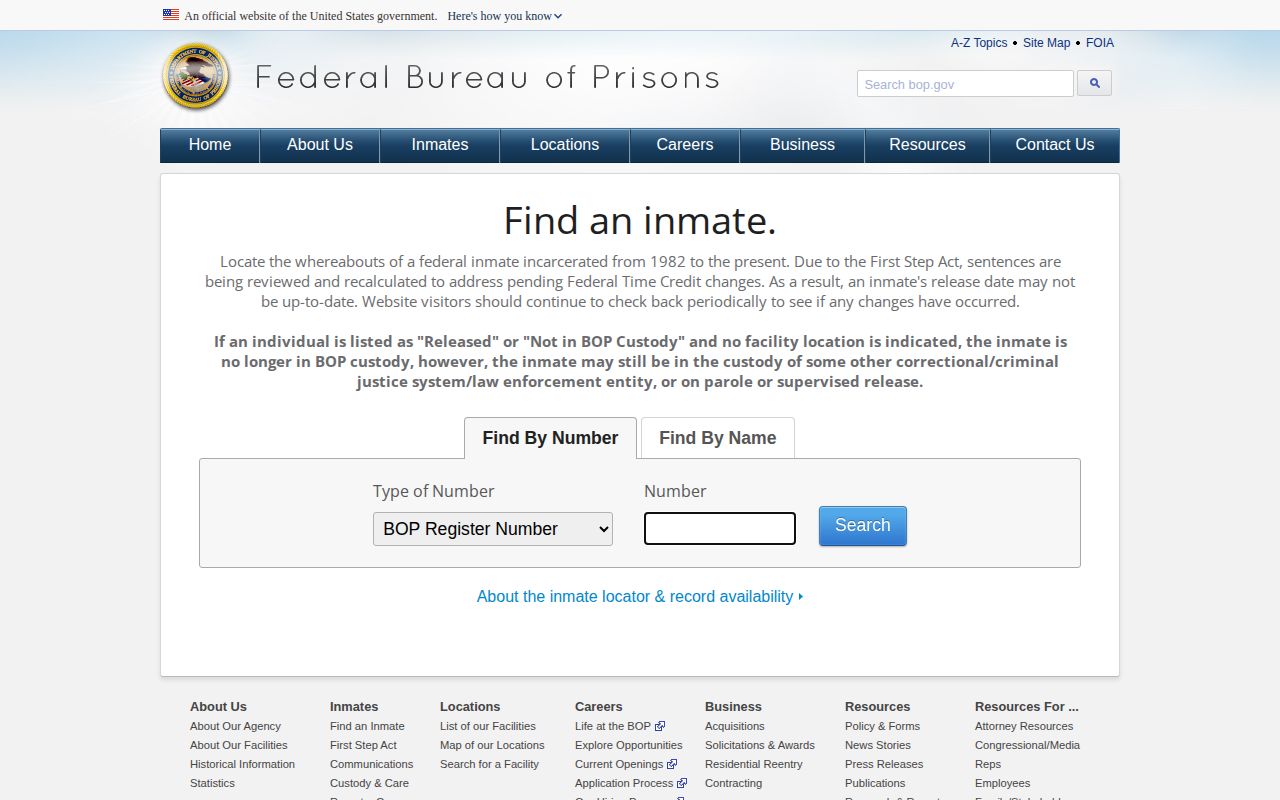
This separate portal demonstrates why a federal name should not be searched through New Mexico VINELink alone.
For a county release, ask the actual jail for the booking and release record. That record can show the exit time, release type, releasing authority, holds, and destination. For an NMCD release, compare the offender search with the OMS movement and sentence records. NMCD Adult Prisons data updates nightly and may take up to 24 hours to appear, so very recent changes need direct confirmation.
Different dates answer different questions. A projected release date is a sentence estimate. Parole eligibility is a legal stage. The actual exit appears in the movement or release record. A person then on parole is physically out of prison but not finally discharged. The strongest proof that parole ended is the New Mexico Parole Board’s final discharge order and certificate.
A transfer must also remain a transfer. “Release to DOC,” “release to USMS,” or “release to ICE” means that one jail stopped holding the person while another authority took over. When the event cannot be resolved online, request the existing release and movement records from the agencies on both sides rather than asking either one to create a new narrative.
ICE uses another system as well. Its Online Detainee Locator searches by a nine-digit A-number and country of birth, or by full name, date of birth, and country of birth. ICE says the tool covers current detainees and people released from its custody during the preceding 60 days. An ICE result answers only the immigration-custody question. After that window, absence is inconclusive, and an ICE release does not resolve a state case, local hold, warrant, or supervision term.
When online tools disagree, preserve the exact wording and time of each result. Then contact the agency that created the event. For NMCD documentary proof, request the movement or release history through its records process. For a county event, direct a narrow request to the jail. Include the full name, identifying number, facility, date range, and records sought. Asking for an existing release entry is more effective than asking an office to explain the entire custody story.