
New Mexico Parole Board Authority
The New Mexico Parole Board is independent, reports to the governor, and is administratively attached to the New Mexico Corrections Department. Under NMSA 1978 §31-21-25, it has authority to grant, deny, or revoke parole. The Board has 15 members appointed by the governor and confirmed by the Senate under §31-21-23. Its records answer whether a hearing occurred and what formal action followed. NMCD movement records answer the separate question of when someone actually left an institution.
The Board states that it conducts about 300 hearings per month and holds hearings weekly at correctional institutions. That scale does not create a public weekly inmate calendar. Individual inmate hearings are closed. Statutory victim participation follows an official path through the prosecuting district attorney’s victim advocate and Corrections Victim Services. General public administrative meetings follow another path.
The monthly hearing figure is not a release count. It describes Board workload, not the number of people granted parole, the number who passed through a prison gate, or the number who later completed supervision. NMCD’s annual reports likewise publish population and supervision measures that cannot be recast as hearing outcomes. A sound person-specific inquiry stays with the named hearing record and the movement that followed.
The official New Mexico Parole Board page describes its authority, closed-hearing practice, frequency, and records route.
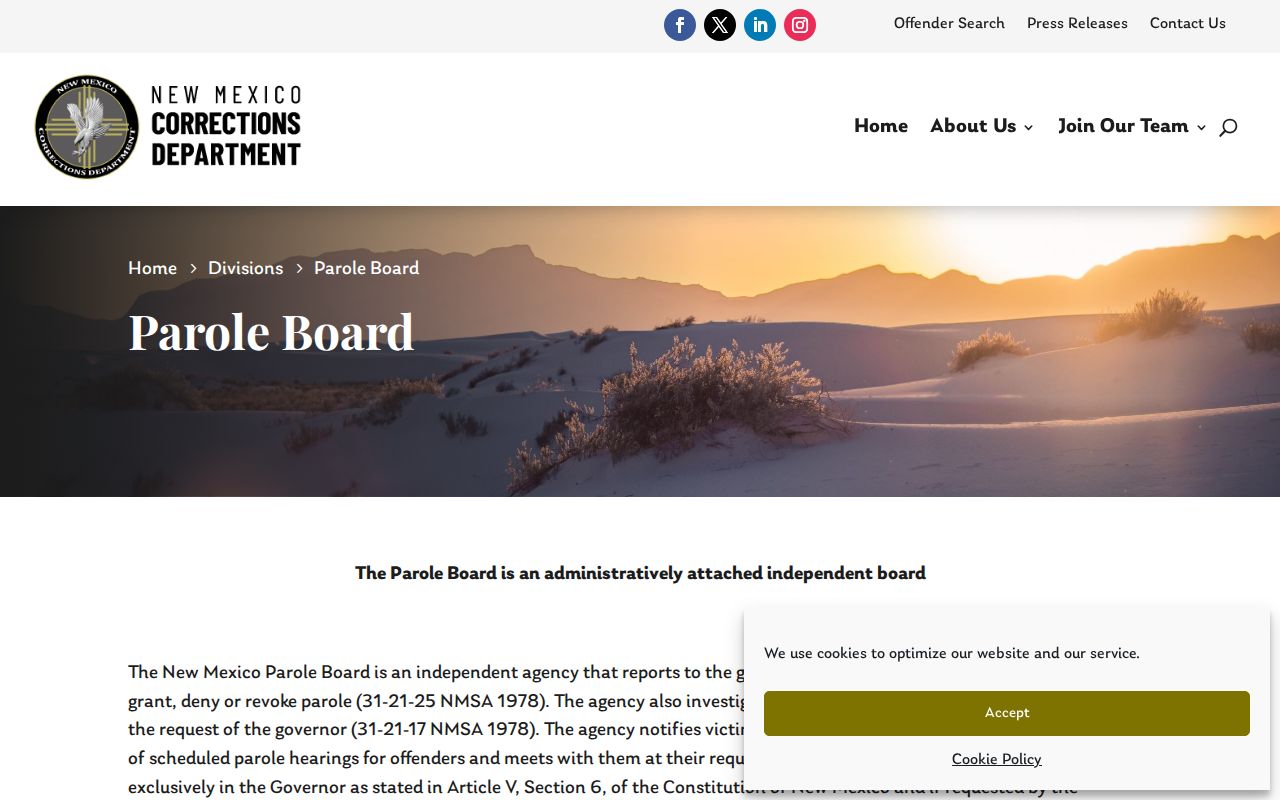
The capture supports the distinction between frequent person-specific hearings and the separate meetings that are open to the public.
New Mexico Parole Hearing Calendar
The Board’s archive contains agendas and minutes for quarterly public administrative meetings. The next public meeting and agenda appear as they become available, and past records remain grouped in the archive. These documents concern Board business. They are not an inmate docket, do not list every person set for a weekly closed hearing, and should never be labeled as a statewide prisoner-hearing schedule.
This difference controls how a date search should begin. A reader seeking a public Board meeting may use the quarterly archive. A person seeking a named inmate’s hearing date needs the person-specific route. The archive updates by meeting, not as a rolling list of hearings at prisons. Searching its agendas for a name is not a reliable substitute for contacting the Board or using the statutory victim-notification channel.
The past agenda and minutes archive visibly identifies the quarterly public meeting record.

The archive documents administrative meetings, not name-by-name New Mexico parole board hearings for inmates.
Request a New Mexico Hearing Date
No official public name-by-name inmate hearing calendar was found in the Board navigation, the quarterly archive, or the NMCD offender search. A supported search therefore uses the Board’s records and participation channels rather than an invented online docket. Start with the identity and sentence, since modern determinate cases and discretionary life cases do not follow the same hearing framework.
- Confirm the full name, NMCD offender number, institution, judgment date, offense, and sentence type.
- Check the Board page for current contact and records information, not the quarterly archive for a presumed inmate entry.
- If statutory victim participation applies, work through the prosecuting district attorney’s victim advocate and Corrections Victim Services.
- For a releasable record, ask the Board Records Manager for the named person’s hearing date or related existing record.
- Compare the response with the operative judgment and any amended judgment before treating a date as current.
The request should be narrow. Supply enough facts to locate an existing record, and ask for the hearing date, notice, or order that actually exists. Do not ask an office to predict when someone must be freed. Eligibility and release involve separate legal and operational steps.
The NMCD offender-search information explains why search disappearance and recent movement need direct verification.
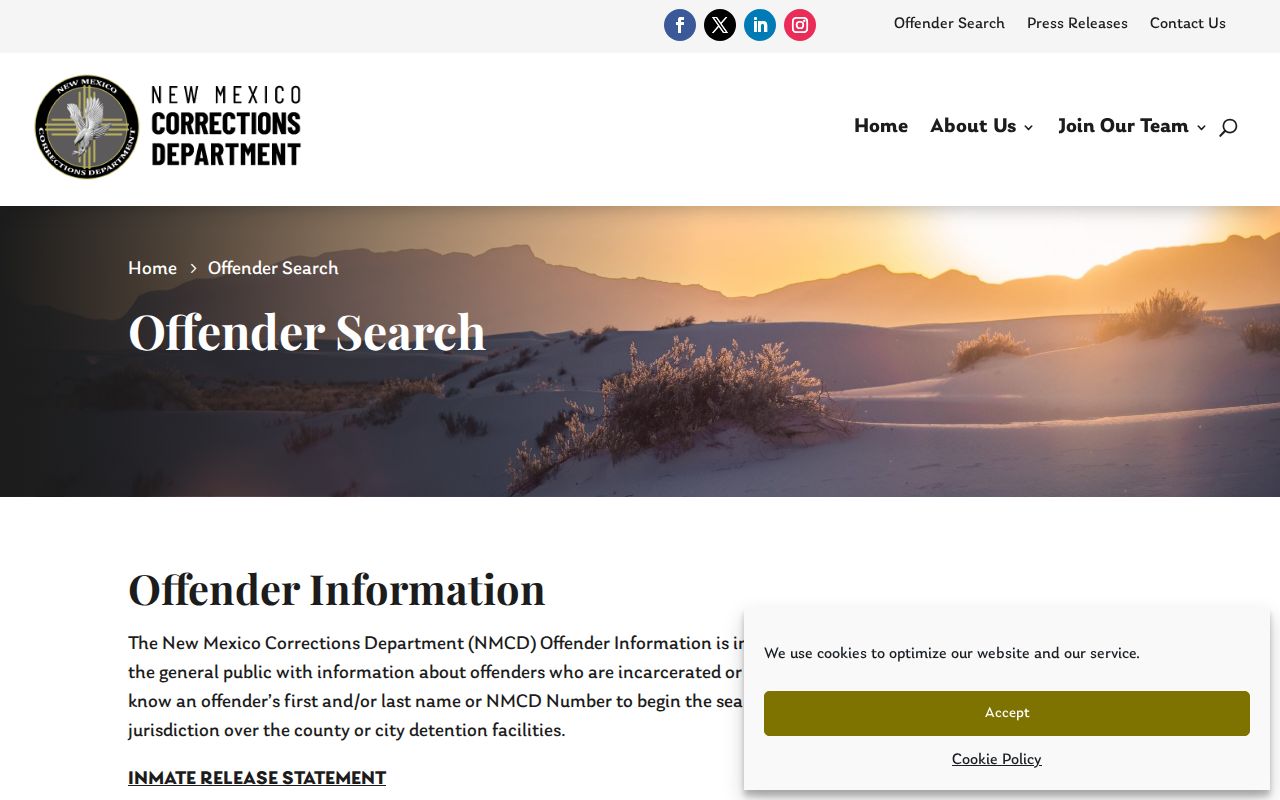
The warning prevents a missing or changed search entry from being misread as a Board decision or a completed release.
Find New Mexico Parole Decisions
No official public name-by-name decisions or results search was located. The Board’s site and archives do not provide a searchable database of individual grant and denial outcomes. The supported statutory action words are grant, deny, and revoke. Do not add another outcome label unless the genuine person-specific order uses it.
- Use the Board page to locate the current Records Manager information.
- Identify the person by full name and NMCD number, then give an approximate hearing period if known.
- Request the releasable hearing decision or order, rather than a new summary of the case.
- Use NMCD movement information to confirm whether and when a grant led to physical release.
- Use the P&P record for active community supervision and the final discharge certificate for its end.
| Supported Board action | What the record can establish | What still needs checking |
|---|---|---|
| Grant | The Board authorized parole under the order’s terms | Plan approval, written conditions, and actual NMCD exit |
| Deny | The Board did not grant parole at that review | The controlling statute and next eligible hearing interval |
| Revoke | The Board ended an existing parole release through formal action | Return movement, underlying records, and later status |
A P&P location in the NMCD search can support that community supervision is active, but it is not the decision itself. An institutional location also does not explain why release has not occurred. The Board order and movement record resolve different facts.
New Mexico Parole Hearing Eligibility
New Mexico does not use one generic discretionary hearing model. For most modern determinate sentences, the Board explains that parole follows once the incarceration part of the sentence is served, subject to conditions and an adequate plan. Board discretion is concentrated in older cases and first-degree-murder or life cases. Medical and geriatric parole have their own provisions. The judgment date, offense, sentence type, amendments, and current statute control.
Under §31-21-10, an adult serving life generally becomes eligible for a hearing after 30 years, subject to youthful-offender rules in §31-21-10.2 and the governing version of the law. Final 2026 Senate Bill 43 addresses risk and readiness, institutional compliance, available programming, maturity, rehabilitation, and fitness. After denial, another hearing occurs at two-year intervals. It also directs that a homicide hearing be set away from a victim’s birth or death anniversary when practicable.
- Eligibility date
- The point at which the Board may consider parole in a case that requires discretionary review.
- Parole grant
- A formal Board action that can lead toward release, but does not by itself prove physical exit.
- Parole plan
- The proposed community arrangement that must be adequate before release can occur.
- In-house parole
- Parole served while still confined because the basic sentence ended before an acceptable plan produced release.
- Final discharge
- The later end of supervision, documented by the Board’s final order and certificate.
Eligibility is not a promised release date. Even a grant may await conditions and an approved plan. The correct sequence is hearing record, Board order, plan status, NMCD movement, P&P supervision, and eventual discharge.
New Mexico Hearing to Release
A person can be eligible but not granted parole. A person can receive a grant but remain inside. NMCD calls the latter situation in-house parole when the basic sentence is complete yet an acceptable plan has not produced physical release. The person is immediately releasable when the plan is approved, but the parole date alone does not prove a gate exit.
After a grant, check the movement or release record for the actual prison exit. Then check P&P for community supervision. Adult Prisons data is updated nightly and may take up to 24 hours to appear, while NMCD describes P&P information as real time. Recent changes still require confirmation from the listed institution or field office.
A county detention record may add another step. “Release to DOC” means the person left the local jail while state custody continued. It is not a community release and does not show that a parole hearing occurred. In the other direction, an NMCD prison exit may begin parole while the legal sentence remains active. The local release code, Board order, state movement, and P&P status must remain separate.
The NMCD offender search provides Include Inactive and region controls that can help locate the next record in that chain.
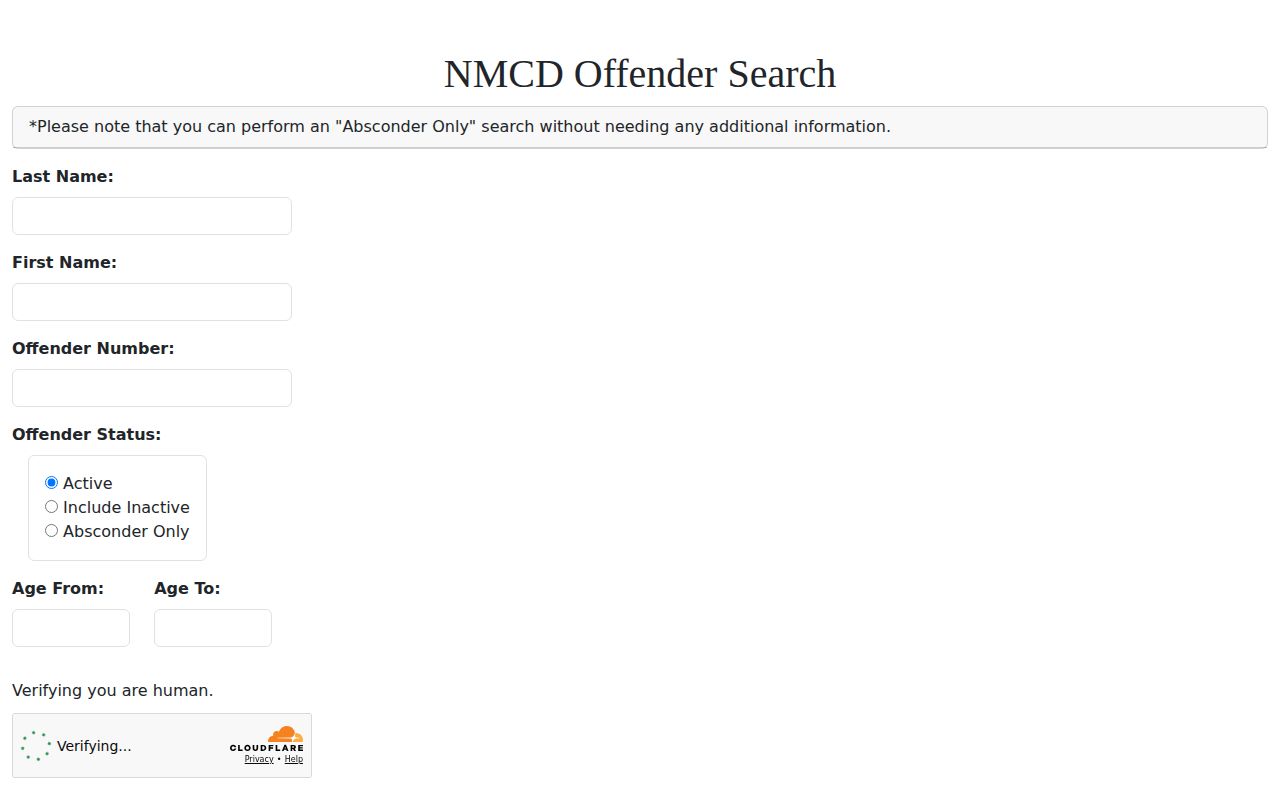
The form can reveal the corrections or P&P channel, but it does not replace the person-specific Board decision or prove physical release by absence.
When supervision follows, the New Mexico parole and probation record path explains how to verify the P&P region and eventual discharge. Keep each record tied to the event it proves.
Request New Mexico Hearing Records
New Mexico’s Inspection of Public Records Act, NMSA 1978 §§14-2-1 through 14-2-12, supplies the general records framework. A custodian generally permits inspection at once or as soon as practical. If the record is not provided within three business days, the custodian gives a written timing response. Production ordinarily occurs no later than 15 calendar days after receipt unless the request is excessively broad or burdensome and a reasonable extra period is communicated.
A useful request asks for existing records, not answers to open-ended questions. Give the full name, NMCD number, institution, sentence or case details, and an approximate date range. Then name the item: hearing notice, releasable decision, final parole order, revocation order, final discharge order, or certificate of discharge. Ask for electronic copies and allow lawful redaction. The agency does not have to create a new calendar, assemble a custom legal analysis, or predict an outcome.
Some information can be withheld or redacted, including protected victim, medical, security, juvenile, sealed, or expunged material. Closed individual hearings do not turn the quarterly administrative archive into a person-search tool. Contacting the Records Manager is the documented fallback when a releasable named-person record cannot be found online.
NMCD’s offender record can help identify the number and institution needed for a focused request. New Mexico Case Lookup can help identify the sentence and amended orders. Neither portal is a public Board decision database. The final response should be compared with the NMCD movement record, because a Board grant and a prison exit answer different questions.
Clemency Is Not a Parole Hearing
Clemency uses a distinct constitutional route. Under §31-21-17, the New Mexico Parole Board may investigate a clemency matter only when the governor requests it. The governor alone holds pardon power under Article V, §6 of the New Mexico Constitution. A pardon application therefore does not belong in the ordinary weekly parole-hearing workflow.
A clemency request also does not, by itself, rewrite the past custody record. The historical jail or prison movement, the sentence, a Board order, and any later gubernatorial action remain separate records. When a release claim rests on clemency, obtain the actual executive action and then confirm the custody movement that followed. Do not infer a pardon from a pending application, a missing offender result, or a quarterly Board agenda.
The Board’s official authority page is the source for its limited clemency investigation role.
Note: A public administrative agenda, a closed inmate hearing, and a governor’s clemency action are three different New Mexico records.