
New Mexico Release Clocks
A New Mexico release can end one form of custody while another legal status continues. The county-jail clock ends when a local detention center records an exit. The state-prison clock ends when the New Mexico Corrections Department, or NMCD, records physical movement out of an institution. A third clock runs through parole or probation until the Board, court, and Probation and Parole Division document completion. These events should not be merged into one date.
Bond, recognizance, a dismissal, time served, sentence completion, parole, and a transfer can all remove a name from a jail roster. Yet a transfer to NMCD, the U.S. Marshals Service, or Immigration and Customs Enforcement is not community release. New Mexico released inmates are best verified by following the last known custodian to the next agency and locating the event record at each handoff.
Important: A missing roster name shows only that the person is no longer displayed there. It does not prove why the person left.
New Mexico Release Types
The words used in a record determine the next step. A local bond release normally remains in county records and the state court docket. A prison release may begin parole. Final discharge comes later, after the legal term ends. “Released to” another agency means custody continued despite departure from the first building.
| Recorded event | What it means | Next record source |
|---|---|---|
| Bond or recognizance | Exit from a county jail under a court release order | County booking/release history and court docket |
| Time served or sentence end | Local or prison term reached its recorded end | Holding facility, NMCD movement record, and judgment |
| Parole | Physical release may occur under Board conditions | NMCD, P&P, and Parole Board orders |
| Transfer | The first facility released the person to another custodian | Destination agency and transfer record |
| Final discharge | Parole or sentence obligations ended through formal action | Board certificate, court order, or NMCD record |
The NMCD home page identifies the state corrections system and its offender-search entry.
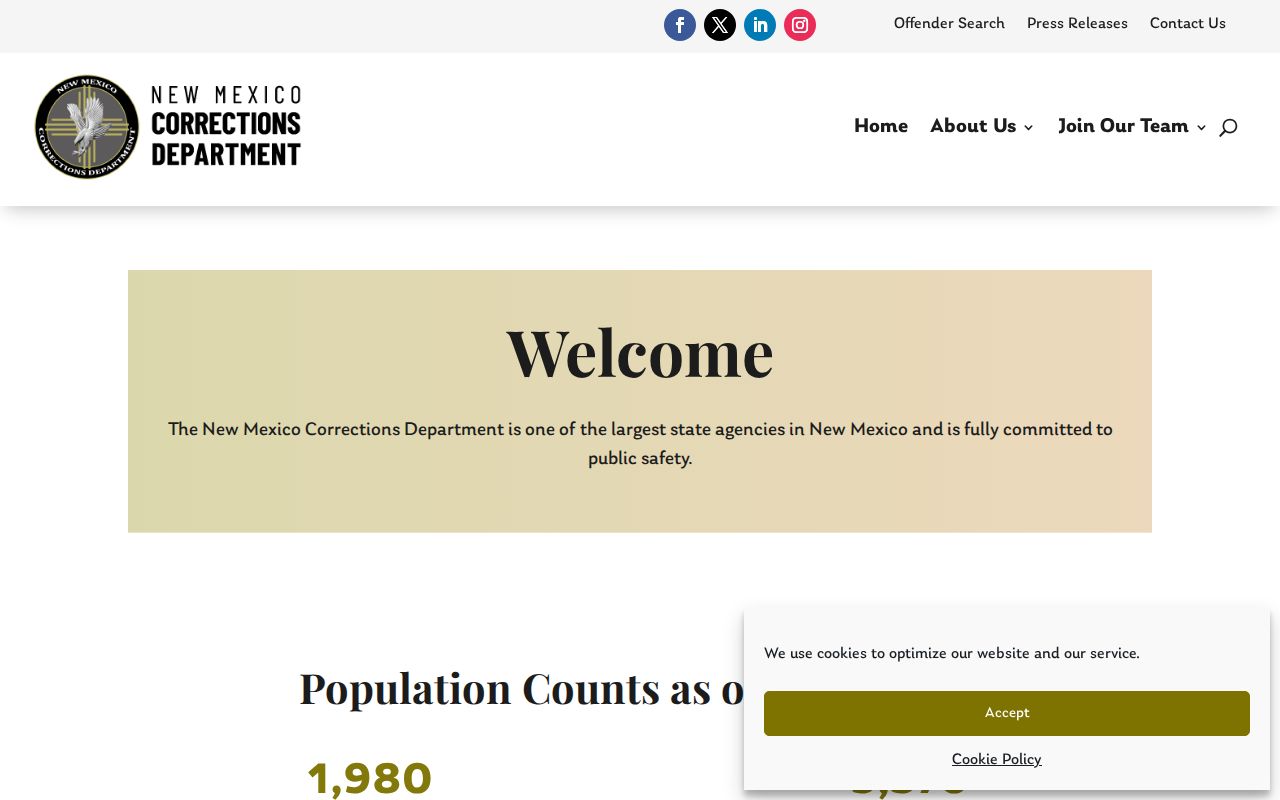
This official starting point is for state prison and statewide supervision records, not a substitute for county jail release files.
New Mexico Release Record Fields
A useful release record identifies the person, the place, the event, and the authority. County formats differ, but the request should seek the same core facts: booking or offender number, actual release timestamp, release disposition, releasing facility, court or agency authority, active holds, and the destination when the event was a transfer. A booking photo is an arrest record, not proof of conviction or current custody.
At the state layer, the public NMCD search is narrower than an institutional file. Its official description supports location, offense, and supervision status. The live form permits Active, Include Inactive, and Absconder Only searches, but NMCD does not promise that every public result uses a universal Released or Discharged label or shows an actual release date. Exact prison-exit and sentence data may require an OMS record request.
| Field | What it establishes |
|---|---|
| Name and identifier | Which person and custody episode the record concerns |
| Release date and time | The documented exit from that facility, if the source records it |
| Release type or disposition | Bond, completion, parole, transfer, or another recorded reason |
| Releasing facility | The custodian whose physical control ended |
| Authority or destination | The order behind the exit or the agency receiving custody |
| Supervision status | Whether parole or probation remains after physical release |
The NMCD offender-search notice explains jurisdiction, update timing, and the risk of treating disappearance as release.
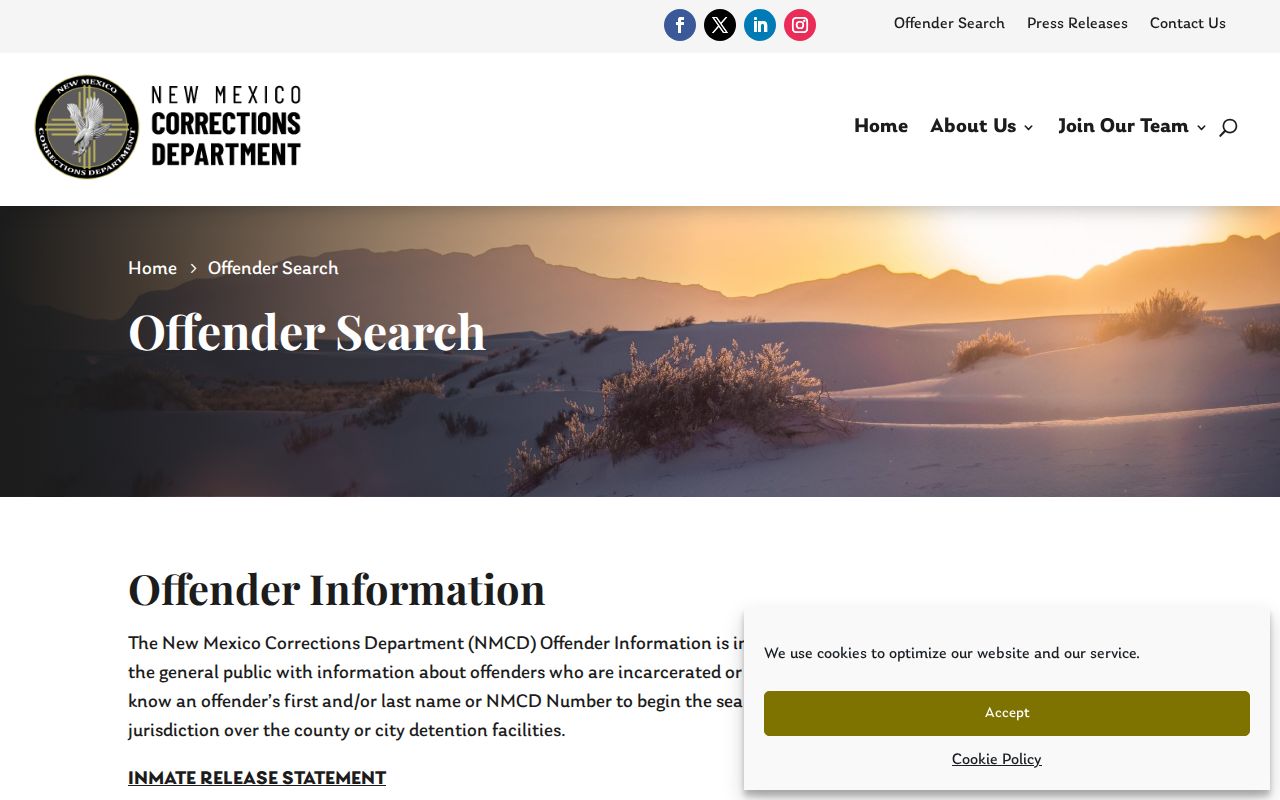
Those limits make the agency record and the public search complementary rather than interchangeable.
Request New Mexico Release Records
New Mexico’s Inspection of Public Records Act, commonly called IPRA, supplies the statewide request process. The custodian should permit inspection at once or as soon as practical. If records are not produced within three business days, the agency generally must send a written timing response. Production ordinarily follows within 15 calendar days unless a request is excessively broad or burdensome and the custodian communicates a reasonable extension.
A records request should ask for existing documents, not demand that staff create a new explanation. Fees vary with the custodian and format, so no single statewide price applies. Electronic copies can reduce ambiguity and preserve the record as maintained.
- Identify the last holding agency, full name, known identifier, facility, and a narrow date range.
- For a county exit, use the jail’s records custodian found through the New Mexico County Directory.
- For a prison exit, submit through NMCD NextRequest or the department’s IPRA custodian.
- Ask for the movement or release history, actual date and type, authority, holds, destination, and relevant sentence or parole documents.
- Accept lawful redaction and follow up with the court clerk when the operative order is needed.
Juvenile, medical, victim, security, sealed, and expunged information can be withheld or redacted. An agency also need not create a record it does not keep.
New Mexico Record Access Limits
IPRA, NMSA 1978 Sections 14-2-1 through 14-2-12, creates the general right and process for inspection while preserving exemptions. The Criminal Record Expungement Act, Sections 29-3A-1 and following, can remove qualifying arrest and court records from ordinary public display. New Mexico Courts provides distinct routes for a release without conviction, a conviction, and identity theft or wrongful identification.
NMSA 1978 Section 29-3-8 requires an arrest photograph in the covered identification process. That does not make every image public forever. A qualifying expungement can reach arrest records, booking sheets, photographs, dispositions, and discharge notations. The official-source review found no enacted New Mexico law that compels online mugshot publication and no verified special anti-pay-to-remove statute. Official custodians and court orders are therefore the sound record path.
Record boundary: A sealed or expunged item may disappear from a public portal while remaining available to an authorized office under state law.
New Mexico Gate Money Proof
NMCD policy recognizes gate money as part of release processing, but the public materials reviewed do not establish one cash amount or one package for every prisoner. Institution, account balance, destination, and current procedure can affect the logistics. Claims about clothes, transport, pickup points, or release hours should come from the institution, not a statewide assumption.
The evidentiary point is more useful. The policy also addresses returning gate money when a planned release does not occur. Preparation may support that staff expected an exit, yet it is not proof that the gate movement happened. The actual NMCD movement/release record remains the better source.
Note: Release preparation and physical release are distinct events, so a trust-account entry should be paired with the institutional movement record.
Find New Mexico Released Inmates
Start with the custody layer. A person who served a state sentence belongs in the NMCD search. A person held only in a local jail belongs in that county’s booking and release system. Federal prisoners use the Bureau of Prisons locator, while recent civil immigration custody uses the ICE locator. The New Mexico court docket helps explain an order, but it rarely gives the jail-door time.
- Confirm the full name, identifier if known, last facility, and approximate custody dates.
- Search NMCD with Include Inactive for a state prisoner or supervisee, then read only the displayed fields.
- For a local jail episode, locate the actual holding county and request its release history.
- Check the court case for the order, judgment, bond action, dismissal, or amended sentence behind the event.
- Use BOP or ICE when the destination or case belongs to a federal system, then follow any later custodian.
- Obtain the source record when a portal result is absent, unclear, or too recent to rely on.
This sequence avoids a common mistake: reading departure from one list as freedom from every form of custody.
NMCD Released Inmate Search
The NMCD offender search accepts first name, last name, and offender number. It also offers age limits, Region I through IV, and status controls for Active, Include Inactive, or Absconder Only. Include Inactive is the right starting filter for a former prisoner or supervisee. An offender number is safer than a common name, but identity still must be compared before drawing a conclusion.
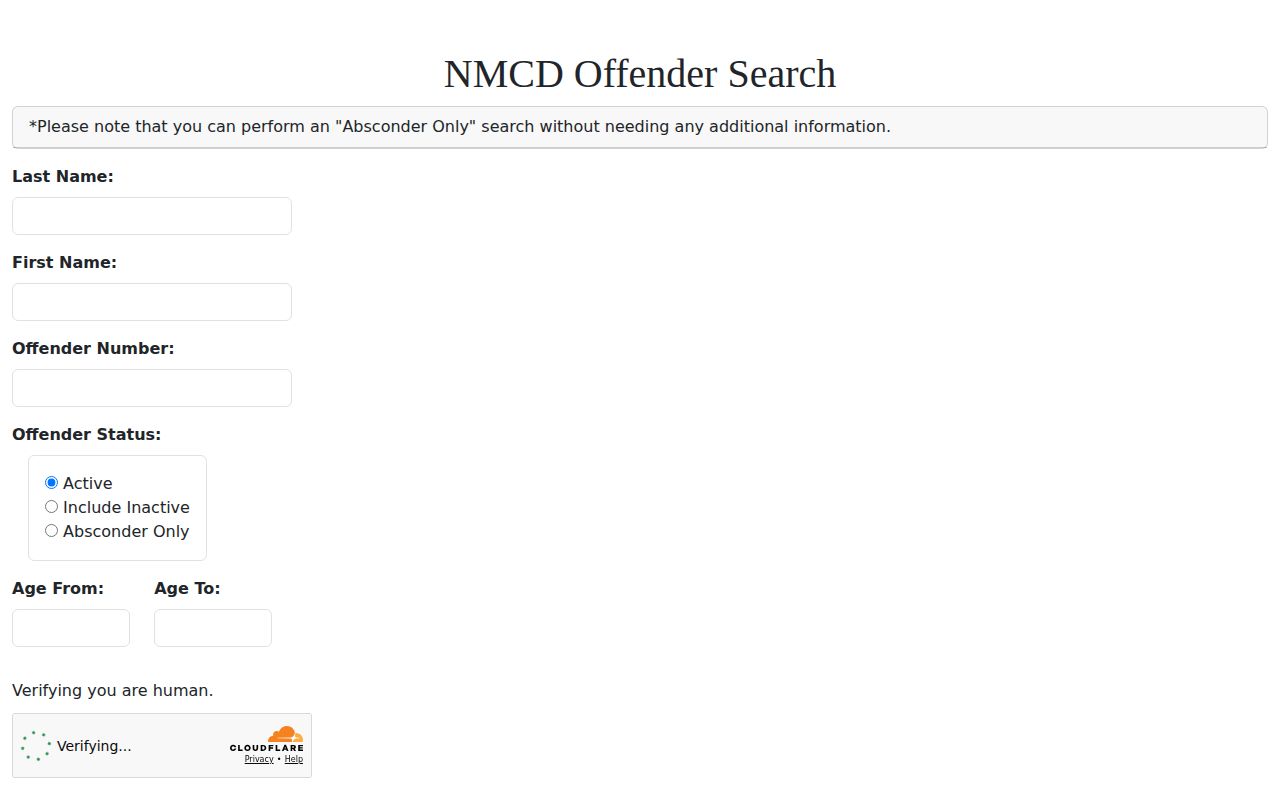
The visible controls show why an Active-only search can miss the person sought and why Absconder Only is a supervision filter, not a release record.
Adult Prisons data is updated nightly and NMCD allows up to 24 hours for availability. Probation and Parole data is described as real time, although fresh movement still needs confirmation. A prison location does not prove release. A P&P location may show physical release into supervision, but not final discharge. A missing result proves neither. The deeper NMCD offender search resource explains the document fallback and the three-clock proof chain.
County Release Records Vary
New Mexico’s 33 counties do not publish one statewide recent-release feed. Some county pages document JailTracker or Zuercher systems. Others expose current custody only. Catron and several other rural counties do not operate a local adult jail, so the sheriff must identify the receiving facility. The county of arrest is not always the place that records the exit.
Use the holding facility rather than a guessed home county. If a roster says transferred, follow the named destination. County pages preserve their actual access method, record window, update pace, and records contact. That local detail cannot be flattened into a single 24-hour or 72-hour claim.
New Mexico Courts Explain Release
New Mexico Case Lookup supplies public party and case discovery, including charges, events, hearings, dispositions, judgments, bond actions, amended judgments, and later warrant activity. The Judiciary warns that the portal is not the official court record. Document access through re:SearchNM depends on the user tier, while the clerk remains the source for the operative file.
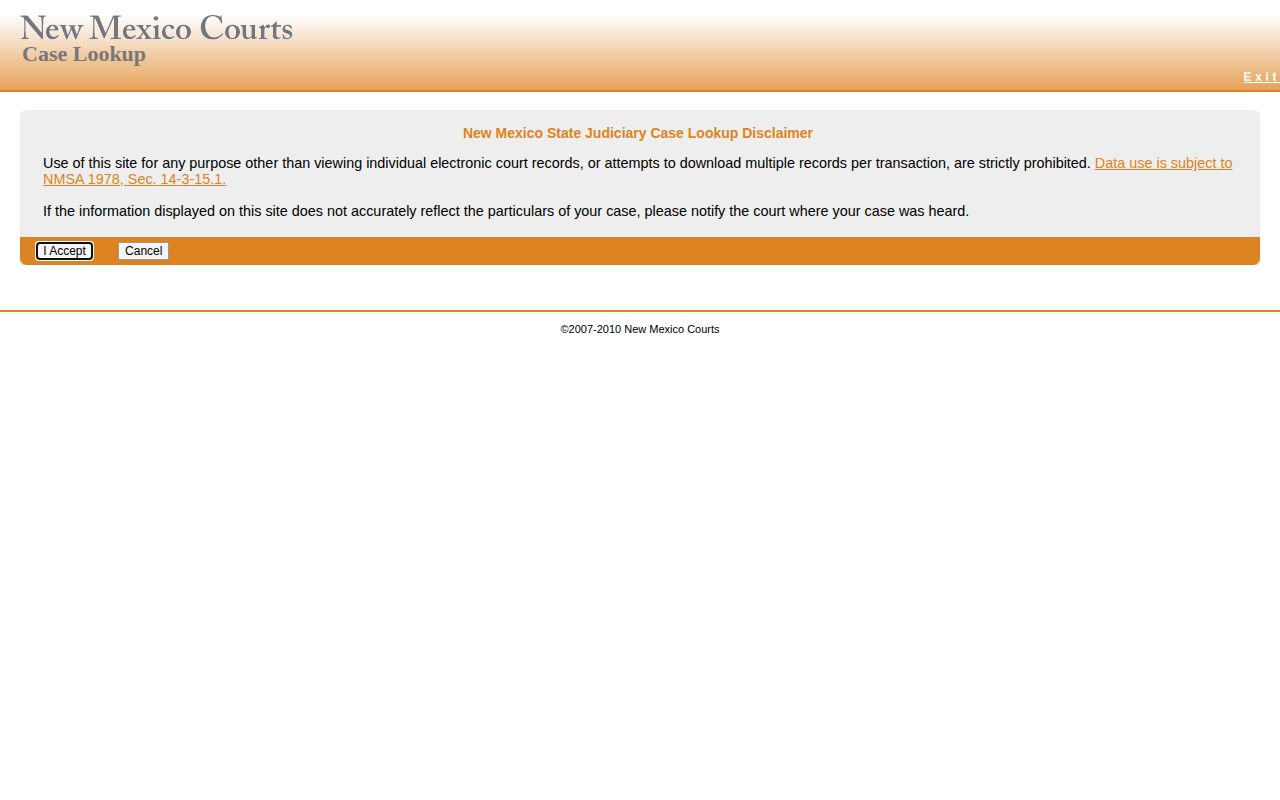
The court search can explain legal authority for release, transfer, or probation, but it normally will not provide the exact facility exit time.
A dismissal closes that prosecution but cannot rule out another hold. A conviction does not establish present custody. Probation usually means community supervision. A commitment order may explain transfer from a county jail to NMCD, and an amended judgment can change the release calculation. When the summary is not enough, obtain the signed order from the clerk.
Use the docket as a timeline, not as a custody roster. Match the case number, party name, court, and event dates before connecting an order to a jail release. A bond order can authorize release while a separate hold delays it. Likewise, a sentence entry can lead to a transfer into NMCD instead of an exit to the community. The clerk’s certified or filed copy resolves wording that a brief online register may shorten. The facility record then shows when staff acted on that authority.
New Mexico Release Supervision
Parole follows confinement and operates under New Mexico Parole Board conditions. Probation is imposed by a court and may exist without a state-prison stay. NMCD’s public form can help locate a P&P record, but the supervising region, court order, and Board documents supply the full answer. There is no separate comprehensive public statewide warrant list for every person on supervision.
Successful parole completion leaves a distinct record. Under Section 31-21-10, the Board enters a final discharge order and issues a certificate of discharge after the required obligations are met. That certificate answers whether parole ended. It is different from the earlier prison release date and stronger than an inactive search result. Verification steps and agency routing appear in the New Mexico parole and probation page.
The New Mexico Parole Board page describes its authority and closed hearing practice.
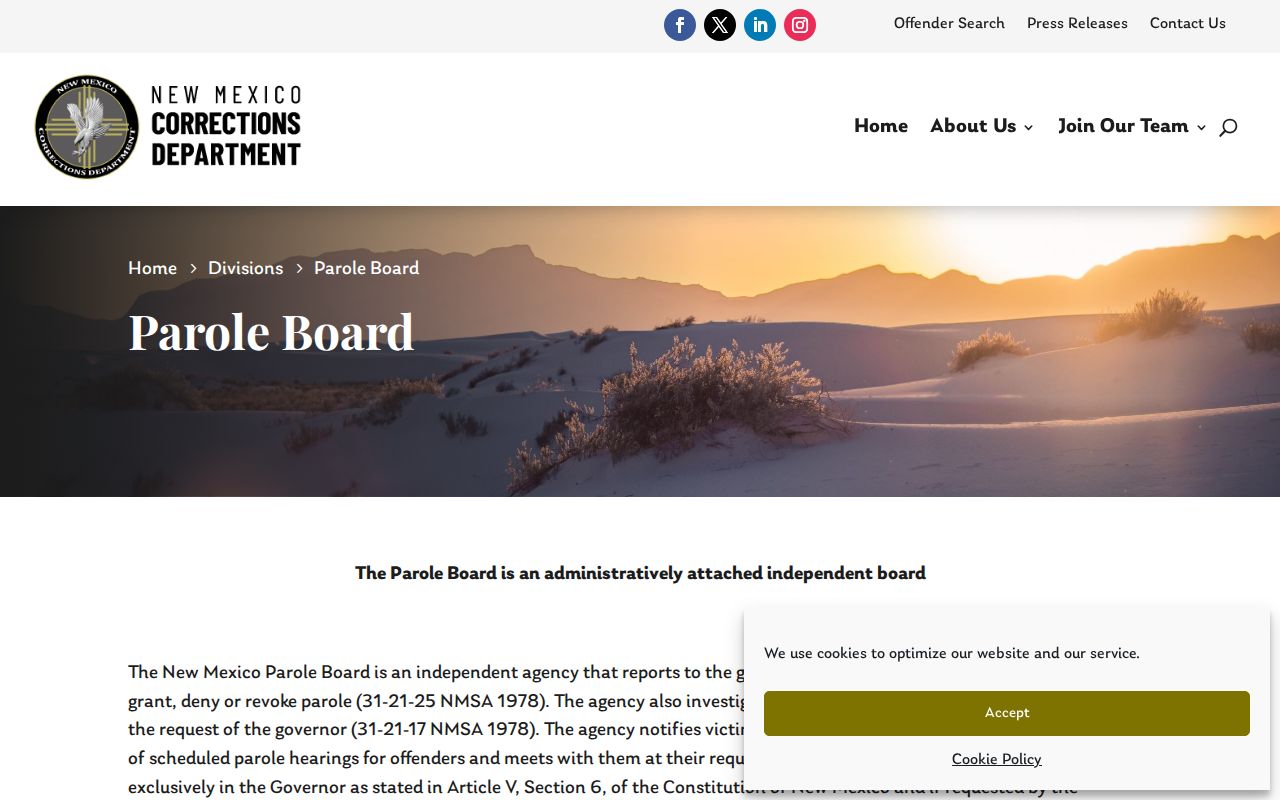
This source also separates weekly individual hearings from public administrative meeting records.
For most determinate sentences, parole follows the served incarceration portion under the governing law and an acceptable plan. Life cases use a different hearing path. A grant or eligibility date still may precede physical movement. The Board order, plan approval, institution record, and later discharge certificate each answer a different part of the release history.
New Mexico Release Alerts
New Mexico VINE through VINELink can search an exact person and register available phone, text, or email alerts. NMCD describes release, out-to-court, and escape notices, but not prison-to-prison transfer alerts. A transfer into a new county or NMCD record may require a new registration. An alert corroborates movement; it does not replace the release code, authority, destination, or exact facility time.
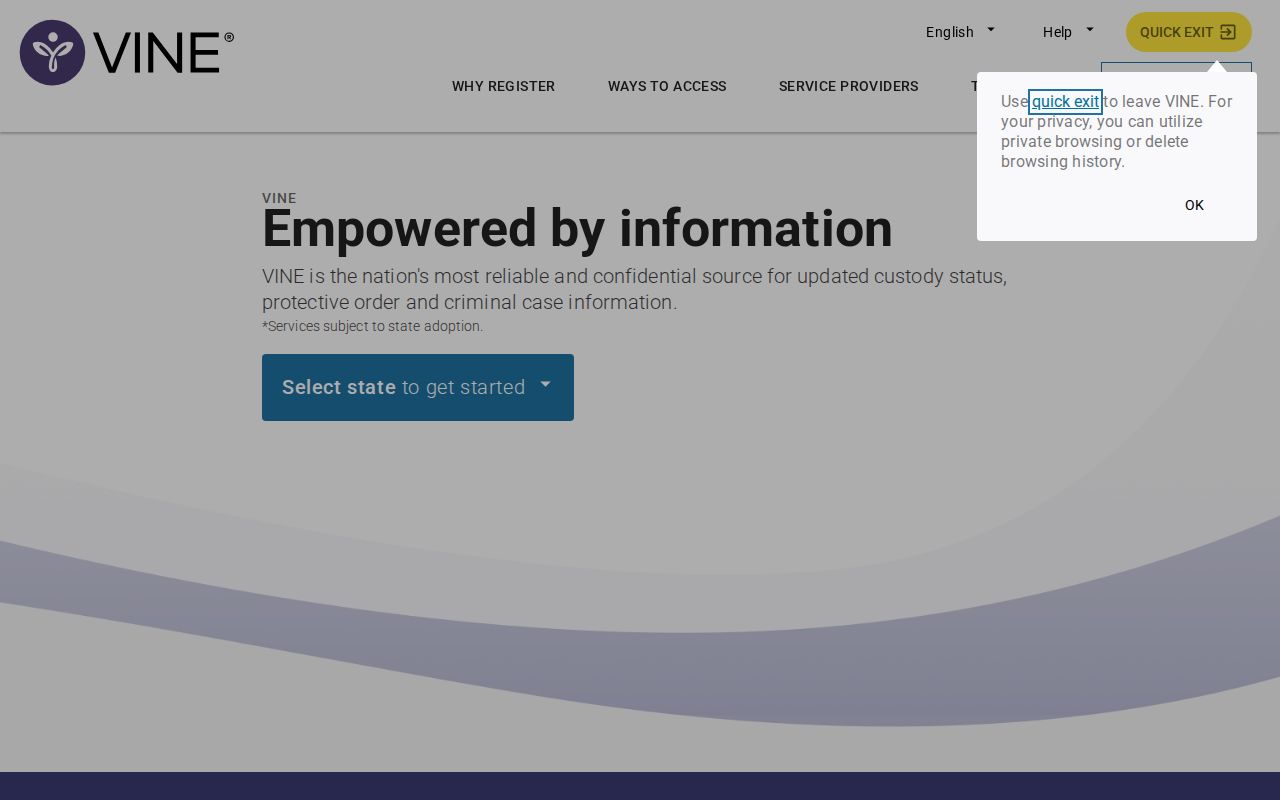
The state selection and person-search controls must be matched to the exact agency record rather than treated as one universal roster.
On August 12, 2026, NMCD posted a dated upgrade notice affecting searches, new registrations, and most NMCD notifications while saying existing release alerts continued. That warning should be checked again when a search is made. County participation also must be confirmed in the live agency selector.
Federal and ICE Releases
The BOP Inmate Locator covers federal prisoners, generally from 1982 onward. It accepts BOP Register, DCDC, FBI, or INS numbers and a name search with identity fields. A former federal prisoner may show RELEASED with a past Release Date or “Not in BOP custody.” That finding concerns BOP custody only and does not rule out USMS, ICE, state, local, or federal supervision.
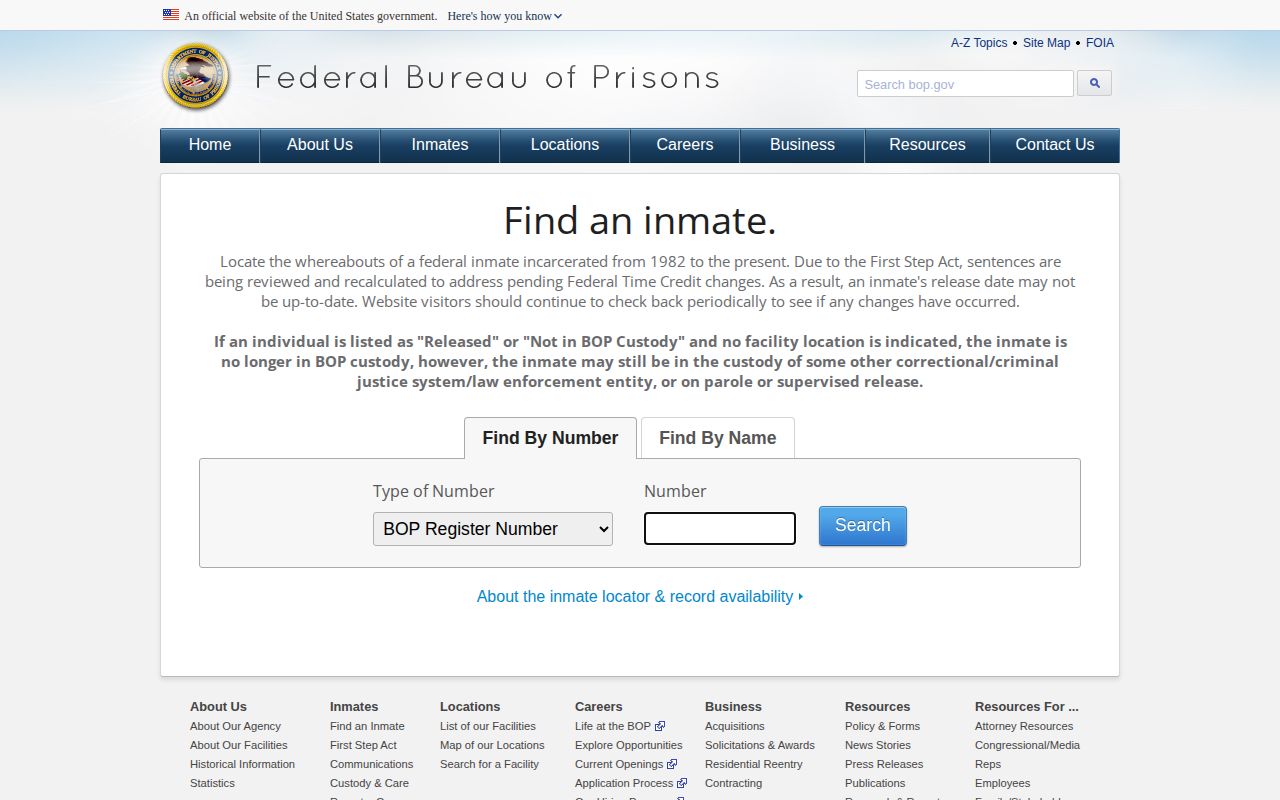
The federal fields make clear why a BOP identifier or careful identity comparison matters before accepting a released result.
The ICE Online Detainee Locator permits a nine-digit A-number plus country of birth, or a full name with date and country of birth. ICE states that it covers current detainees and people released from ICE custody within the preceding 60 days and excludes people under 18. Absence beyond that period is inconclusive. A county record marked “release to ICE” is a custody transfer, so the chain must continue with ICE.
New Mexico Release Statistics
New Mexico does not publish one clean recent annual total of actual prison exits in the sources reviewed. The FY2024 NMCD report gives a calendar-year 2024 average daily prison population of 5,285 and says P&P served more than 13,000 people. Those are stock and supervision measures, not annual releases. The 2025 annual report, published in April 2026, describes capacity and a current prison population, again not a release count.
The New Mexico Sentencing Commission counted 5,672 confined people on June 30, 2025 and projected 877 people in its basic-sentence population into release year 2026. A separate time-served study sampled 325 male EMD release records with exclusions. Neither figure may be relabeled as verified statewide exits. Sound release reporting keeps the date, denominator, and study design attached.
Note: A daily population, a projected cohort, and a research sample measure different things and cannot be added into a release total.
New Mexico Custody Comparison
Each system answers a narrow question. The correct source depends on who held the person and which clock needs proof.
| System | Useful for | Does not prove |
|---|---|---|
| County live roster | Current display at one local jail | Why a missing person left |
| County release history | Actual local exit, code, time, and destination | Later custody or final supervision discharge |
| NMCD search and records | State prison, movement, and P&P trail | County-only jail release |
| New Mexico courts | Order, judgment, bond, and disposition | Exact jail-door timestamp |
| BOP or ICE locator | Custody within that federal system | Freedom from every other sovereign |
New Mexico Release Facilities
New Mexico custody includes county and regional detention centers, eight public NMCD facilities, the privately operated Otero County Prison Facility, tribal custody documented in the county research, and separate ICE sites. No BOP-operated prison was identified in the state. A county of conviction does not determine the NMCD institution, and some counties send detainees elsewhere because they have no adult jail.
The statewide facility roll-up links every covered detention page to its verified county destination. Historical sites remain labeled as historical, juvenile access limits remain visible, and transfers remain distinct from release.